Key Benefits
One-Pass Seedbed Preparation
Combines rotary tillage, fertilizer application and seeding in a single operation.
Integrated Fertilizer Application
Allows fertilizer placement together with pneumatic seeding.
Flexible Row Configurations
Available in different row numbers and working widths.
Accurate Pneumatic Metering
Provides controlled seed and fertilizer application.
Radar Speed Synchronisation
Helps maintain the selected application rate as forward speed changes.
Wide Model Range
Available in configurations from 8 to 24 rows.
Six Field Operations in One Pass
01 — Rotary Tillage
The rotary tillage unit prepares and loosens the soil ahead of seeding, creating a workable seedbed for the following operations.
02 — Fertilizer Application
The integrated fertilizer system meters and distributes granular fertilizer according to the selected application rate.
03 — Furrow Opening
Disc furrow openers create the required seeding furrows before seed placement.
04 — Pneumatic Seeding
The pneumatic metering and delivery system transports metered seed through the seed lines to the seeding outlets for controlled distribution across the working width.
05 — Soil Covering
Following seed placement, the soil is returned towards the seed zone to cover the seed furrow.
06 — Reconsolidation
The rear roller reconsolidates the worked soil, helping establish consistent soil-to-seed contact.

Interchangeable Metering Rollers
Different metering rollers are available for different seed types, seed sizes and application rates.
Selecting the correct roller helps maintain accurate metering, particularly when working with small seeds and low application rates.
The metering roller can be changed without specialist tools, allowing the seeding system to be quickly adapted for different crops and compatible materials.
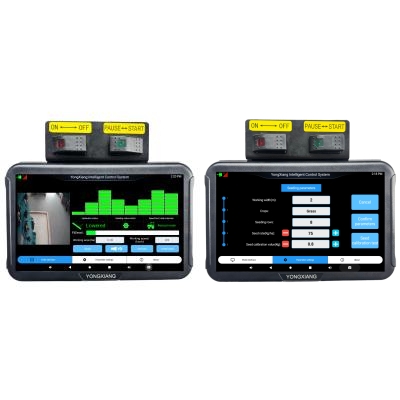
Intuitive Control and One-Touch Calibration
The 10-inch control console allows the operator to monitor and adjust key seeding parameters from the tractor cab.
The system provides access to application-rate settings, calibration functions, hopper-level information and other key operating data.
A straightforward calibration function allows the operator to check and adjust the application rate before field operation.
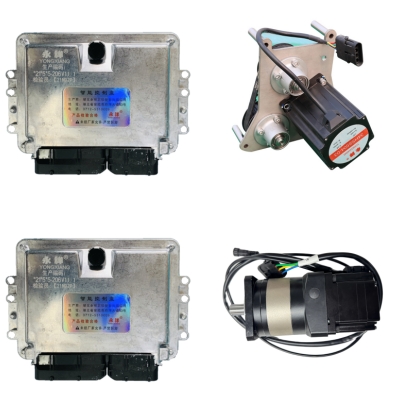
Consistent Metering with Electric Drive
The selected metering roller and its rotational speed determine the application rate.
The metering system uses an electric drive controlled by the central control system. The metering speed is adjusted according to the selected application rate and forward speed.
This speed-responsive control helps maintain consistent material delivery as field speed changes.
The YongXiang seeder uses a 12V stepper motor on 8-row, 12-row and dual 12-row configurations, while 16-row and 20-row models use an outer-rotor BLDC servo motor.
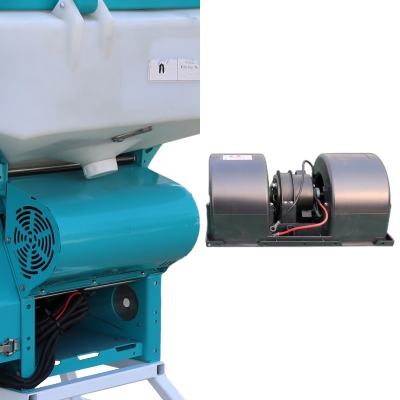
Pneumatic Seed Delivery
12V electric fans generate the airflow required to transport metered seed through the seed lines to the distribution outlets.
The pneumatic delivery system provides an even flow of material across the working width. Protective mesh at the fan air intakes helps prevent straw and debris from entering the fan system.
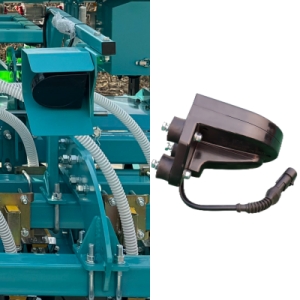
Radar Speed Synchronisation
The radar sensor continuously measures forward speed and sends the speed signal to the control system.
The metering drive responds to changes in forward speed, helping maintain the selected application rate when the tractor slows down or accelerates.
This speed-responsive control supports consistent material application across changing field conditions.
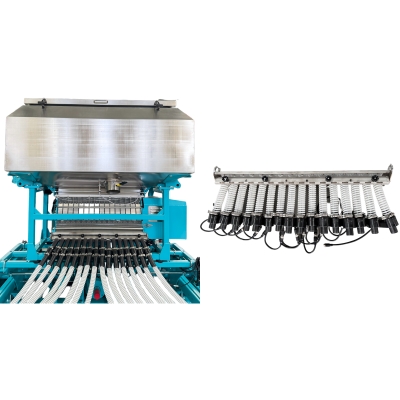
Optional Seed Tube Blockage Monitoring
Optional seed tube blockage monitoring detects interruptions in material flow through the seed tubes.
Sensors monitor material flow below the discharge points and provide an alert on the control terminal if a blockage or missed delivery is detected.
This gives the operator an additional check on seed delivery and helps identify problems quickly during operation.
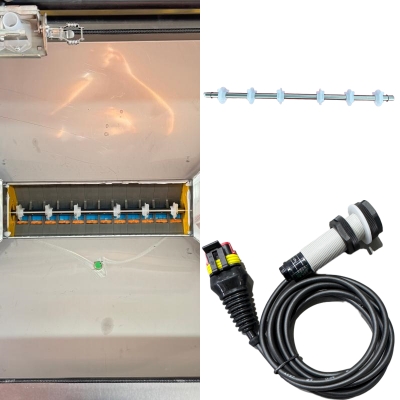
Agitator and Hopper Level Monitoring
An agitator positioned above the metering roller helps maintain a consistent material flow and reduce the risk of bridging in the hopper.
A low-level hopper sensor provides an alarm when the material level falls below the set threshold, allowing the operator to plan refilling and avoid unnecessary empty runs.
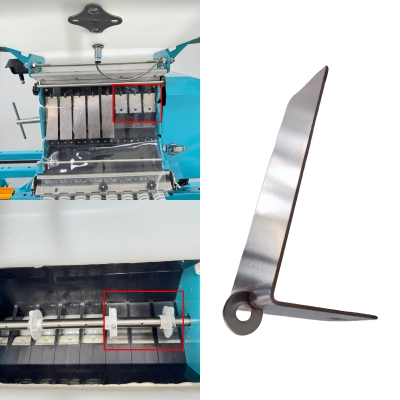
Flexible Outlet Configuration
Each outlet can be opened or closed independently using the supplied L-shaped plugs.
This allows the number of active outlets to be matched to the required working width and row configuration.
For example, an 8-outlet configuration can be adjusted to use fewer active outlets when a narrower working width is required.
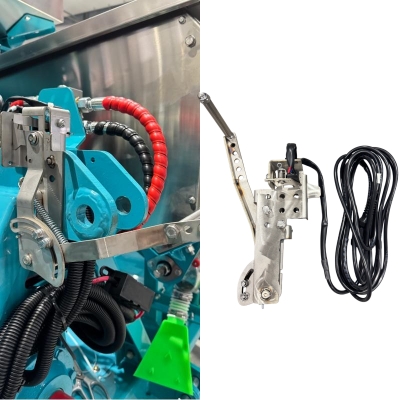
Optional Lift Switch Kit
The optional lift switch kit automatically starts or stops metering according to the position of the implement.
When the implement is raised, the metering system stops automatically. When the implement is lowered again, metering resumes.
This provides automatic start/stop control during headland turns, transport and other raised-implement operations.
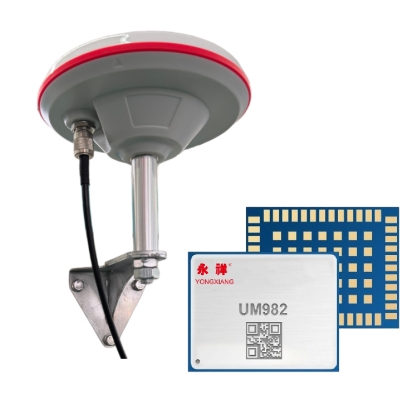
Optional GPS Speed and Positioning
An optional GPS sensor can provide the vehicle's speed signal to the control system for speed-responsive metering.GPS speed data can be used as an alternative to radar speed signal.
An optional GPS positioning chip can provide positioning information for monitoring the seeder's field trajectory.
GPS positioning functionality is currently under overseas testing and should therefore be regarded as an optional developing function rather than a fully established feature.
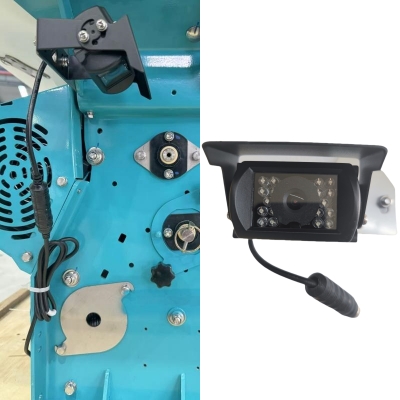 Real-Time Seeding Monitoring
An integrated camera allows the operator to monitor the seeding process from the control console.
This provides an additional visual check during operation and helps the operator monitor the working condition of the seeding system from the tractor cab.
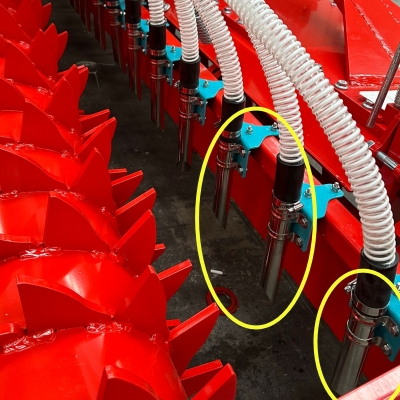 Precision Row Seeding
The 2BFG-B Series can be configured for row seeding according to the selected outlet arrangement.
For row seeding, stainless-steel outlets can be fitted to the seed lines to deliver material through individual outlets.
This flexibility allows the seeding system to be adapted to different crops, working widths and application methods.
Standard Equipment
10-inch touchscreen control console
2 × 30 m seed hoses
Standard metering rollers
Battery connection cable
Calibration kit and electronic weighing scales
Speed radar
Rotary tillage unit
Fertilizer application system
Disc furrow openers
Reconsolidation roller
Seed agitators
Hopper level sensors
Motor monitoring
Camera
Broadcast heads
Foreign-object sieve
Rocker switch


